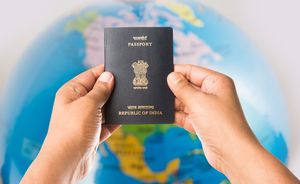
When my son Ishaan?a part-Malayali, part-Bengali, part-Kashmiri, who was born in Singapore and had grown up since the age of six in the US, married an American-born woman and spent his adult life working for a pair of prominent American media houses?announced in 2020 that he had obtained American citizenship, it was America’s “civic nationalism” that he celebrated, taking pains to distinguish it from the “blood and soil nationalism” of other countries.
As a father, who had made the opposite choice in returning to the land of my forebears, I was deeply conflicted about his decision: relinquishing his Indian passport seemed almost a betrayal. And, yet even as that thought occurred to me, I realised how laughable it would seem to those of Ishaan’s generation, who, even as they are connected atavistically from the heart to the land of their ancestors, are far more concerned about identifying the right environment in which they can thrive, than on mystical notions of nationalism within old-fashioned territorial boundaries.
Ishaan reacted to my angst by saying pointedly that he would have been happy to retain his Indian passport too, if only India permitted dual nationality. But India does not, insisting, unlike the US, that national allegiance is indivisible.