When these words appear, our 71st Republic Day will just be behind us. Our national celebrations of this anniversary of the entry into force of our Constitution have been tempered by the raging coronavirus pandemic, which already claimed the event’s chief guest, British Prime Minister Boris Johnson, who cancelled his visit because of the emergence of a new mutant strain of Covid-19 in his country. But for many of us, the mood of celebration was also dampened by the realisation that never before has the Constitution we are celebrating seemed under such threat, with some scholars even writing of the dawn of a second republic that may have already supplanted the one established on January 26, 1950.
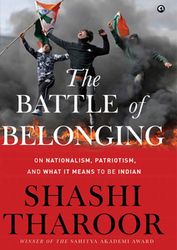
I have tried to deal with this challenge in my new non-fiction magnum opus, The Battle of Belonging: On Nationalism, Patriotism and What It Means to Be Indian, which seeks to expand our current political mudslinging into a serious debate on the concept of nationalism and Indian nationhood. These are themes that have increasingly become relevant around the world and are contested in contemporary India today, since some have been promoting a version of nationalism that foments division and fragmentation within our society.
My book seeks, first, to outline the evolution of nationalism across the world, its manifestations globally and the various kinds of nationalism that have shaped the concept. This serves as a framework through which I introduce the contemporary challenges of nationalism and nationhood across the world and in India, particularly the clash we are witnessing today between ethno-religious nationalism (based on immutable identities) and civic nationalism (based on constitutions and institutions).
The second theme is the evolution of Indian nationalism from the anti-colonial days to the civic nationalism enshrined in the Constitution. The nationalism that inspired the long struggle for independence was rooted in India’s time-honoured civilisational traditions of inclusivity, social justice, religious tolerance, and the desire to forge a society that allowed individuals to flourish, irrespective of their religion, caste, language or place of birth. This constitutional idea of India is being challenged by a new dominant narrative that thrives on an exclusionary, aggressive, communal nationalism based on cultural identity and the notion that India is a Hindu Rashtra.